


News & Articles
Christmas in a Care Home: What Families Can Expect

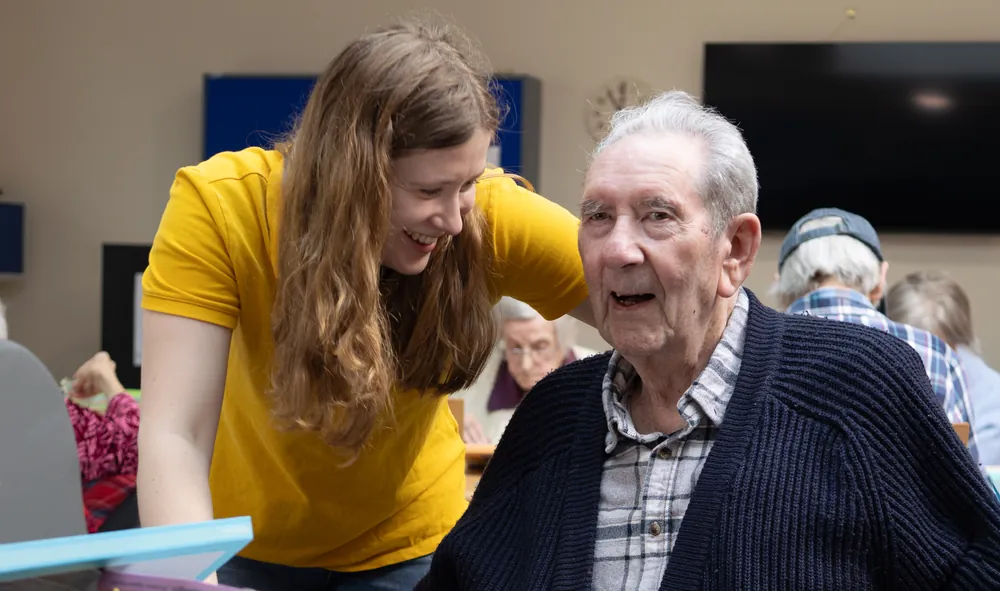
Christmas has a way of showing you how things really are. The whole family finally sits round the same table, and someone notices that Mum is more confused than she was last year, or that Dad needed a hand to get out of his chair. Nobody says much at the time. But the thought sticks.
Many families tell us the conversation about care starts in December, or just after the new year. If that is where you are, you are not alone, and you are not doing anything wrong by asking the question. This guide covers what Christmas is really like in a care home, how to make it a good one for your loved one, and what to think about if you are wondering whether now is the time to look at care.
Why Christmas is often when families notice changes
Most of us do not see our relatives every day. We see them at birthdays, on bank holidays and at Christmas. That means changes in memory, mobility or confidence can feel sudden, even when they have built up slowly over months.
Winter makes things harder too. Cold weather, dark afternoons and icy paths make it riskier to get out and about. Falls become more of a worry. Shopping and cooking take more effort. Days at home can stretch out with nobody to talk to.
None of this means you have to make a decision this week. It does mean it is worth being honest about how things are going, ideally before a crisis makes the choice for you. Our guide on when it is time for a care home can help you work out where you stand.
The Christmas many older people face at home
Age UK polling published in December 2025 suggested that around 1.5 million older people in the UK would eat their Christmas dinner alone, and around 670,000 would not see or speak to anyone at all on Christmas Day. Age UK has also pointed out that many younger relatives assume an older person would rather have a quiet day, when in fact they would often welcome the company.
For someone living with dementia, it can be harder still. Alzheimer’s Society research has found that over half of people affected by dementia (51%) find Christmas the most isolating time of the year.
A care home is not the right answer for every family. But for a person who is lonely, Christmas in a home full of people, music and conversation can be a very different day.
What Christmas looks like in our homes
Every Living Developments home does Christmas in its own way, but the aim is the same. Our homes are meant to feel like home, and that includes the festive season. Decorations go up, the kitchen is busy, and there is always something going on for residents who want to join in, whether that is a sing-along, afternoon tea, a seasonal party or a quiet game of cards. Residents who would rather sit with a cup of tea and watch it all happen are just as welcome.
Visits from local schools are a highlight of the year, and you can read about one of them in our story about a school choir walking through our doors. Young voices and old songs go a long way.
Families are part of Christmas too. Visiting hours are flexible, so you can come on Christmas Eve, Christmas Day, Boxing Day or whenever suits your family. Guest dining means you can sit down and share a meal with your relative rather than watching from the side.
Familiar faces matter at this time of year as well. When the people caring for your loved one have known them for years, they know who loves a particular carol and who finds a crowded room too much. That is one of the reasons low staff turnover matters in care homes.
How to visit well over Christmas
A few small things can make a big difference to how a visit feels, for you and for them.
Pick their best time of day. If your relative is brighter in the morning, go in the morning. Late afternoon is often the hardest time, especially in winter when it gets dark early.
Keep visits short and calm. Two or three shorter visits over the festive period usually go better than one long, noisy one. Leave before they are tired, not after.
Bring something familiar. Old photographs, a playlist of the carols they grew up with, a favourite blanket or the Christmas cards from the family. Children’s drawings are always a hit, and a visit from the family dog can lift the whole room (check with the home first).
Stay away if you are unwell. Winter coughs and stomach bugs spread quickly in any shared setting. If you have a cold or have been around someone who is poorly, ring the home before you come. You can read more about how we protect residents in our guide to infection control in care homes.
Think carefully about taking them out. Many families take a relative home for Christmas lunch. If you would like to, talk to the team in advance so that medication, mobility and any equipment are planned for. Be honest with yourself about how a long day away will feel for them. For some people it is a treat. For others it is tiring and unsettling, and a meal in the home with the family around them is kinder.
Christmas and dementia
Christmas can be overwhelming for someone living with dementia. Routine matters, and December tears it up. There are more visitors, more noise, different food and a home that suddenly looks different. Alzheimer’s Society and the families who use its helpline suggest a few things that tend to help:
Put decorations up gradually. A living room that is transformed overnight can be confusing or frightening. Adding a few things at a time gives them a chance to get used to it.
Use music and memories. A song they used to love or a pile of old photos can bring more connection than any present.
Have a quiet space. A calm room to retreat to makes a busy day much easier.
Keep plans loose. Have a plan B, and be ready to change course if something is not working. The day may not look like past Christmases, and that is fine.
In our dementia care homes, the team learns each resident’s life story, so they know what Christmas has meant to that person. Alzheimer’s Society also has more advice on its support at Christmas page.
Is winter a good time to look at care homes?
Honestly, yes, in some ways. A home in December shows you what life there is like on a dark afternoon as well as a festive one. You see how staff talk to residents when nothing has been staged, whether the place is warm and welcoming, and whether people look settled.
When you visit, it helps to ask how the home handles Christmas Day, how staffing works over the holidays, and how residents who do not want to join in are looked after. Our guide on how to choose a care home has a fuller list of things to look for.
If you are not ready for a permanent move, a short stay can be a gentle first step. Respite care can last anywhere from a few days to several weeks. It gives a family carer a proper rest over the winter, and gives your loved one the chance to see what living in a care home is really like. You can read more about the benefits of respite care here.
We also offer a four-week trial period, so you and your loved one can find out whether it feels right before making a longer commitment. If cost is on your mind, our care home funding guide explains the options.
If you feel guilty about it
Almost every family we speak to feels guilty at some point. Christmas can make it worse, because it is the time of year when we think hardest about being together. But choosing professional care is not giving up on someone. It can mean they are safer, warmer and less alone than they would be at home, and it can mean you get to be their son, daughter, husband or wife again rather than only their carer. Our article on overcoming guilt when moving a loved one to a care home speaks to this in more detail.
And if you are worried about someone who is on their own this Christmas and is not in your family, a phone call can mean a lot. Age UK’s Silver Line is open day and night on 0800 4 70 80 90 for any older person who would like a chat.
Frequently asked questions
Can I bring my relative home for Christmas Day?
In most cases, yes. Speak to the care team a few days beforehand so that medication, mobility needs and timings can be organised. We will also talk through how your relative is likely to cope with a long day away from the home.
Can I join my relative for Christmas lunch?
Family members are welcome to join for meals through our guest dining arrangements. Let the home know in advance so we can plan for numbers.
Can someone move in over the winter?
Yes. We support new residents with moving in and offer a four-week trial period, so there is time to settle and decide whether it is the right place. If you are not ready for a long-term move, respite care is another option.
What if my relative does not want to join in with the festivities?
That is completely fine. Not everyone enjoys parties, and some people find them tiring. Staff get to know each resident’s preferences, and a quiet Christmas with a favourite film, a good meal and a friendly chat is just as valid as a busy one.
Talk to us, with no pressure
If Christmas has got you thinking about care for someone you love, we are happy to talk it through. There is no obligation, and you are welcome to visit before you decide anything.
You can reach the team on info@livingdevelopments.com or through our contact page. If you would like to see a home for yourself, we have a care home in Blackpool at The Willows, a care home in Merseyside at Elmtree House, and a care home in Cumbria at The Millfield.
Visit our care homes
Contact us to arrange a visit or have a conversation
